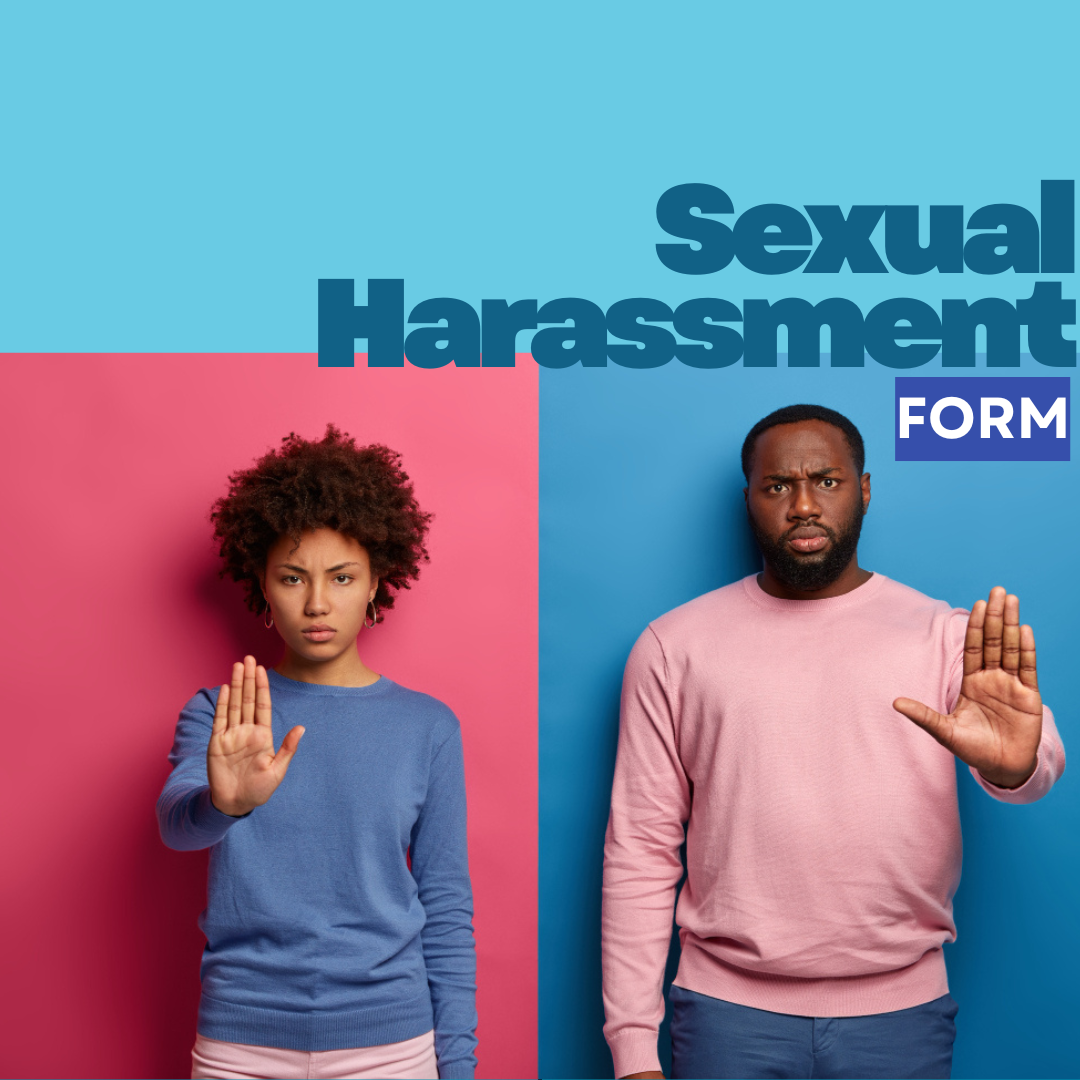
It’s the end of a restful weekend, and you get back to work pumped up and ready to smash your weekly goals, only to be paid an uncomfortable comment or touched in a certain way that makes your skin crawl. It’s a situation that’s unpleasant but happens too often in the workplace: Sexual harassment.

In such instances, sexual harassment forms are a simple yet powerful way to report such issues without raising your voice. These forms help you reclaim your safety and make the other party desist from such behaviorat work or anyplace else.
Let’s take a quick dive into how these forms work and ways they promote a respectful, safe, and supportive environment for everyone. Sexual harassment forms are lifelines for employees to report incidents, seek redress, and help the organization maintain a safe work space for everyone.
Understanding What a Sexual Harassment Form Is
A sexual harassment form is a document, digital or physical(Paper forms), that allow employee report sexually deviant behaviour at work and ultimately spur or trigger an investigation of reported cases. It’s a structured way for you to say what transpired and how you felt about it.
Sexual harassment forms collect important details of the incident, protect the identity of the alleged victim, and document the incident formally for the organization to act appropriately. They are useful to both HR managers and employees alike to create or follow a structured or streamlined process for handling such harassment in the workplace.
Key Elements Every Sexual Harassment Form Should Include
A good sexual harassment form should be clear, easy to use, and contain the following standard details.
- Reporter’s Information: The identity of the complainant, their name, job title, and the option of anonymity where applicable.
- Incident Details: Details of the incident, like the time, date, location, and a clear description of what occurred.
- Involved Parties: Here you list the alleged victim, harassser and witnesses, if any.
- Evidence Section: An area to describe or attach supporting materials, voice notes, video clips, emails, or Phone logs.
- Impact Description: A space to report how the incidence affects the victim physically, emotionall or mentally.
- Confidentiality Options: A section to select an anonymous status orindicate whetherf certain details can be shared.
- Submission Instructions: Clear instructions on how to submit the form, what to expect after submission, and the next steps.
- Policy Reference: A mention of your organization’s harassment policy to ensure alignment between the alleged case reported athe detailsils of the policy.
The Importance of Sexual Harassment Reporting Forms in the Workplace
These forms are important. Here is why they matter:
- Empower Employees: Sexual harassment forms provide astreamlinedd process for reportingsuch incidentss without any hassles or bottlenecks.
- Meet Legal Standards: Compliance with legal standards across countries. For instance, it is mandatory for employers to address harassment and document compliance.
- Build Trust: A transparent and laid-out process for reporting builds trust and creates a feeling of safety. So employee know that they have an avenue to express their grievance when such incidents occur.
- Prevent Bigger Issues: Early reporting can prevent such incincidentsom escalating into major conflicts and potential lawsuits that could be damaging your organziaton brand image.
- Accountability: When employees see that there is a structure to document such incidents, they act more cautiously and avoid careless slips that could be reported as harassment
Different Types of Sexual Harassment Forms You Can Use
- Employee Complaint Forms: These types of forms are for employees to report harassment directly with a detailed account of the incident.
- Anonymous Reporting Forms: Meant for those who would prefer to report cases without revealing their identity, especially when they witnessed an incident. This encourages more people to come forward.
- Manager or HR Investigation Forms: Mostly used by HR or Management to document their findings, either for reference or documentation that would informnext steps and outcomes.
- Incident Follow-Up and Resolution Forms: They act as a tracker of the outcomes of the complaints. It details steps that were recommended and implemented, and disciplinary actions or mediation results.
Best Practices for Creating Sexual Harassment Forms That Employees Will Actually Use
A form that’s difficult to navigate would be draining to use. Here are 6 quick tips to make your form friendly and easy to fill out.
- Keep It Simple: Use simple words and language that communicateempathy. Remove ambiguous words, legals that could be interpreted as masked threats.
- Make It Accessible: Provide the forms in various formats, online and offline, and multiple languages if you have a diverse workforce.
- Highlight Confidentiality: Make it clear how privacy is protected and assure users that there will be no backlash or any need for fear or retaliation.
- Streamline the Design: Make the fields logical and concise with clear guidelines for submission.
- Offer Support: Provide contact details for additional help, like a counselor, Hr and basically resources and all the immediate help available.
- Educate Staff: Educate employees on ways to use the form, where to find it during onboarding or periodic training sessions.

Digital vs Paper Sexual Harassment Forms: Which Works Best?
Both digital and paper forms have their advantages; you might wonder if one is better. Let’s take a quick look
Digital Forms
- Pros: They are easy to fill out and can be accessed in real time once submitted. They also support anonymity for users who would like to keep their identity private, and work well across all settings, remote or onsite.
- Cons: However, it requires access to the internet, and there is also the concern for users who are not tech savvy and the security of platforms, especially those with a weak encryption system.
Paper Forms:
- Pros: There is no tech barrier, it’s easy to distribute in the office, and there is no need for internet access to fill or submit.
- Cons: It’s more difficult to store securely. Might be difficult to ensure anonymity, and it can easily be subject to wear and tear.
- Verdict: Digital forms are usually more efficient and secure. However its ideal to have paper forms as a backup plan so employees get to choose the channel via which they are most comfortable reporting.
How to Customize a Sexual Harassment Form for Your Organization
A one-size-fits-all form won’t cut it. Here’s how to tweak yours:
- Match Your Policy: Make sure the form reflects your organization’s harassment policy and any legal requirements.
- Fit Your Culture: You can use a tone and style that your employees will find familiar and comfortable.
- Add Branding: Add your company’s branding to give it a professional look.
- Address Unique Needs: If your company has remote employees, you can add a section for virtual harassment.
Customization makes the form more relevant to your employees and will prompt them to use it.
Step-by-Step Guide to Building a Sexual Harassment Form Online
You can create a form online in a few simple steps. Here’s a guide:
What You’ll Need:
- A user-friendly form creation tool: Formplus, Google Forms, JotForm, or Typeform.
- A harassment form template or a blank form to create from scratch.
- Essential fields: Include fields for incident details and reporter information.
- Anonymity: Include a section for anonymity.
- Usability: Test your form to ensure it works well on mobile and desktop.
- Security: Encrypt your form and store it securely.
- Distribution: Share your form via email or your company’s intranet.
- Notifications: Configure notifications for HR and managers to receive new form submissions.

Free Sexual Harassment Form Templates You Can Use Today
You can use free templates to create your form. Here are some free templates:
Formplus:
Formplus is an online form builder that enables users to create professional forms in minutes and makes it easier for their employees to use. Its user friendly, code free and has a wide array of form templates that can be fully customized to meet your unique needs and requirements.
Its Kanban-style drag and drop form builder makes it easy to customize any of the form templates to meet any unique business needs. The form builder enables users to create forms such as surveys, registration forms, and feedback forms, among others, in addition to integrating them with other applications to facilitate automatic management of form data.
The form builder has numerous features that make form management easier, including:
- User-friendly interface – users do not require any coding skills to use the form builder.
- Customizable templates – users can fully customize forms to meet their needs.
- Data management – users can efficiently manage form data.
- Integration – users can integrate forms with applications such as Google Sheets and Zapier, among others.
How Confidentiality and Compliance Are Protected with Digital Forms
Digital forms can also be developed with strong privacy features:
- Encryption: SSL encryption is used to protect the information being sent.
- Restricted Access: Only allow certain groups, like HR or legal teams, to see or change the responses.
- Secure Storage: Use GDPR or HIPAA-compliant databases to store the sensitive information.
- Audit Trails: Track the users accessing the forms.
- Anonymity Options: Provide the option for the reporter to remain unknown.
Common Mistakes to Avoid When Designing Sexual Harassment Reporting Forms
- Too Complicated: Do not add too many questions or technical jargon to the form.
- No Anonymity Option: Do not require the reporter to disclose their identity.
- Vague Instructions: Provide clear instructions on the submission process.
- Not Considering Accessibility: Do not provide the option for a paper or translated version, or for submission in multiple languages.
- No Follow-Up Plan: Do not leave the employees in the dark as to what happens after the submission.
How a Form Builder App Makes Sexual Harassment Reporting Safer and Easier
Form builder apps like Formplus take the hassle out of designing secure and user-friendly forms:
- Easy Customization: Personalize the forms with the company’s logo, color scheme, or add certain questions with ease.
- In-Built Security: Provide the option for the reporter to remain unknown and use encryption.
- Automation: Send instant notifications for new submissions.
- Data Insights: Track the trend of the locations where the incidents have occurred.
- Mobile Access: Provide the option for the reporter to use the company’s mobile app to send the reports from anywhere, anytime.
Conclusion

Sexual harassment in the workplace is real, and smart tools like Formplus can help reporting become safer, faster, and more accessible for everyone. The wide array of sexual harassment form templates on Formplus aids organizations in helping empower their employees, meet their legal obligations, and create an environment in which everyone can feel safe and valued.
It’s not just about compliance, it’s about building & maintaining a solid culture!
Sign up here to get started with your sexual harassment form today.