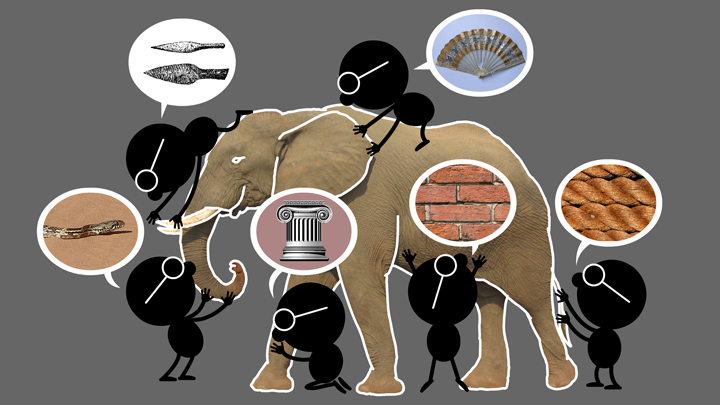
Imagine a country with a low literacy rate and a low average income. It feels natural to assume that every illiterate person there earns very little. But that assumption is wrong, and it has a name: the ecological fallacy.
The ecological fallacy, sometimes called the population fallacy, is the error of applying a group-level finding to the individuals within that group. What is true of a group on average is not always true of each person in it. Group data hides individual differences.
This mistake matters. It leads to poor decisions, misleading conclusions, and invalid research. Understanding it helps you interpret data accurately and stops you from making claims your data cannot support.
Why the Ecological Fallacy Happens
Four common causes push researchers into this trap:
- Overgeneralized group data. Researchers collect data from groups and assume it reflects the behavior or situation of every individual within them.
- Limited individual data. Individual-level data is often unavailable or too costly to gather. Group data becomes a substitute. But it rarely captures the important differences between people.
- Hidden variation. Every group contains people with different backgrounds, experiences, and traits. When you only look at group averages, those differences disappear. The data then falsely suggests that all members are alike.
- Trend generalization. A pattern that shows up at the group level gets treated as a rule for every individual in that group. This shortcut produces incorrect conclusions.
Real-World Examples of the Ecological Fallacy
Here is what the fallacy looks like in practice:
- Crime: A city reports a high crime rate. It would be a fallacy to conclude that any given resident is a criminal. Most are not.
- Income: A country has a high average income. That does not mean every citizen is wealthy. Averages can hide deep inequality.
- Education: A school posts a low average test score. Assuming every student there is below average ignores the strong performers in every classroom.
- Health: A country consumes a lot of meat per capita. That does not mean every citizen eats meat. Some may be vegetarian.
- Politics: A community votes strongly for one party. Assuming every individual voter supports that party ignores the many residents who voted differently.
Where Researchers Most Often Make This Mistake
The fallacy shows up across industries, but a few fields are especially prone to it:
Public health. Researchers compare disease rates across regions and assume every person in a high-rate area faces the same risk. This ignores personal factors like lifestyle, genetics, and access to healthcare.
Education and demographics. A low-performing school gets treated as a school full of low performers. In reality, student ability varies widely within any school.
Economics. A high national average income gets read as proof that citizens are well off. Household and individual incomes tell a different story.
Political research. A region that leans toward one party gets treated as unanimous. Minority opinions within that population get erased.
Marketing and consumer research. A product is popular with a demographic, so businesses assume everyone in that demographic wants it. Personal taste varies, and campaigns built on this assumption often miss.
Ecological Data vs. Individual Data
The fallacy comes from confusing two types of data. Here is how they differ:
| Feature | Ecological data | Individual data |
|---|---|---|
| Definition | Collected and analyzed at the group level (cities, schools, countries) | Collected and analyzed for individual people or units |
| Unit of analysis | Groups or populations | Individual participants or subjects |
| What it shows | Summarized information about groups | Detailed information about each person |
| Best used for | Spotting trends, patterns, and relationships across groups | Understanding individual behavior and characteristics |
| Cost and effort | Cheaper and easier to collect at scale | More expensive and time-consuming to collect and analyze |
| Main risk | Ecological fallacy when group findings are applied to individuals | High cost and complexity |
Both types are useful. The danger starts when you draw individual-level conclusions from group-level data.
How to Avoid the Ecological Fallacy in Your Research Design
Six practical safeguards keep your conclusions honest:
- Collect individual data where possible. Do not rely on group data alone. Gathering data directly from individuals reduces the risk of false assumptions.
- Match your conclusions to your data level. Findings based on groups should describe groups. Findings about individuals need individual-level data.
- Examine variation within groups. Look at how individuals differ inside the same group instead of stopping at the average. This gives a fuller, more accurate picture.
- Control for other variables. Factors like age, income, education, and location can drive results. Accounting for them prevents misleading conclusions.
- Interpret findings with care. Avoid broad generalizations. Acknowledge the limits of aggregated data and say clearly what your data can and cannot show.
- Combine data sources. Where possible, pair ecological data with individual-level data. Multiple sources improve the accuracy and reliability of your findings.
Conclusion
Using group data to draw conclusions about individuals produces invalid findings, no matter how clean the numbers look. The fix is simple in principle: match your conclusions to the level at which your data was collected, and never forget that groups are made of people who differ. Researchers who follow this rule produce work that is more accurate, more valid, and more trustworthy.